
Bet Check is available today in WagerLens. It reads a bet, matches it to a real market on the board, and returns the facts WagerLens can verify. Type something plain, like Cal Raleigh over 1.5 total bases or Cooper Kupp over 29.5 receiving yards.
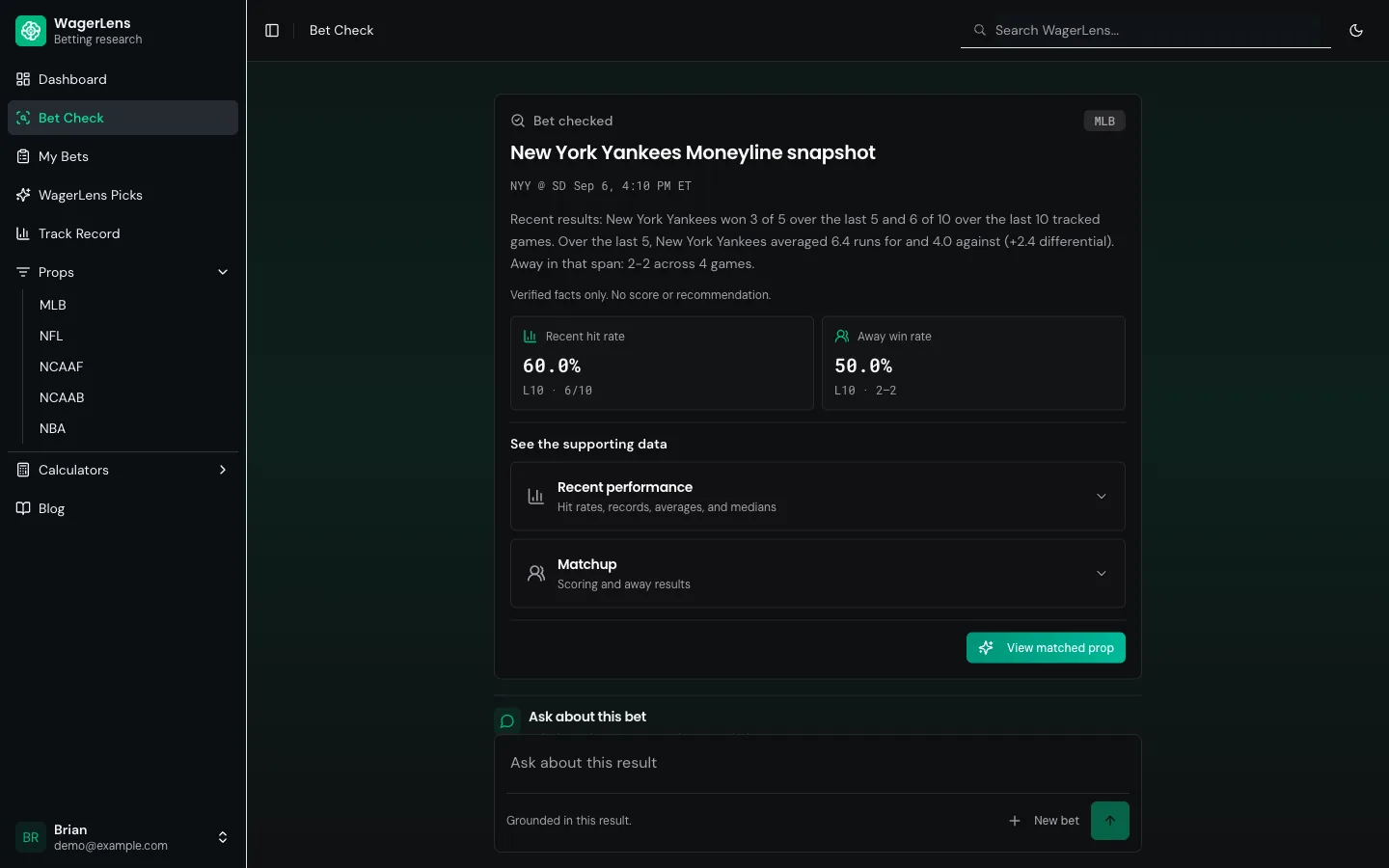
It does not tell you whether to bet it. Every result carries the line: "Verified facts only. No score or recommendation." That boundary matters because a 7-for-10 trend and a -118 price are evidence, not permission.
It supports MLB, NFL, NBA, and NCAAB text checks today. NCAAF is not supported by Bet Check yet, even though NCAAF game markets can appear elsewhere in WagerLens. Type the bet. Keep the whole input under 4,000 characters. A slip can include up to 20 legs.
How it works
Most betting tools start by asking you to navigate. Pick the sport. Pick the market. Pick the player. Pick the book. Bet Check starts with the words already in your head.
You type one bet or paste a slip with one leg per line. WagerLens parses the text, checks the supported sport and market, then tries to match it against the live board. If you write a team moneyline, it looks for that team market. If you write a player total-bases prop, it looks for that player prop.
On desktop, the composer can also show a few live example chips when today's board has matchable player props. They come from the current slate, so the examples can change or disappear when nothing qualifies.
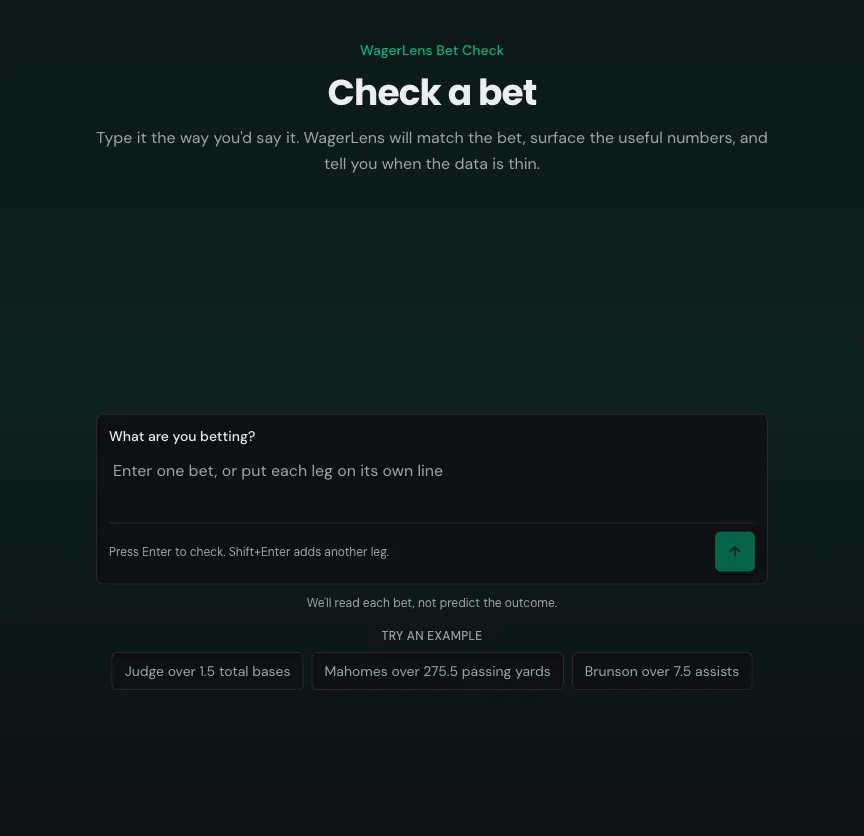
This is the idea, not the full manual. For button-by-button details, read the Bet Check user guide.
What you get back
The point is to make you pause where bettors usually rush. Did WagerLens match the bet you meant? How many games produced the percentage? Which book is charging the better price? Which part of the evidence is missing?
The match, restated
Start with the restated bet. The card shows the sport, subject, market, side, line, matchup, and start time when those fields are available.
That line is boring on purpose. If you meant one receiving-yards prop and the match points somewhere else, you should catch that before reading any trend.
The numbers, with denominators
Percentages without samples are bait. Bet Check shows the count next to the rate, like 6/10 beside a 60% recent hit rate.
The denominator is the whole point. A player hitting a line in 3 of 3 games is interesting. It is not the same signal as 8 of 10 or 42 of 70.
Every book's price
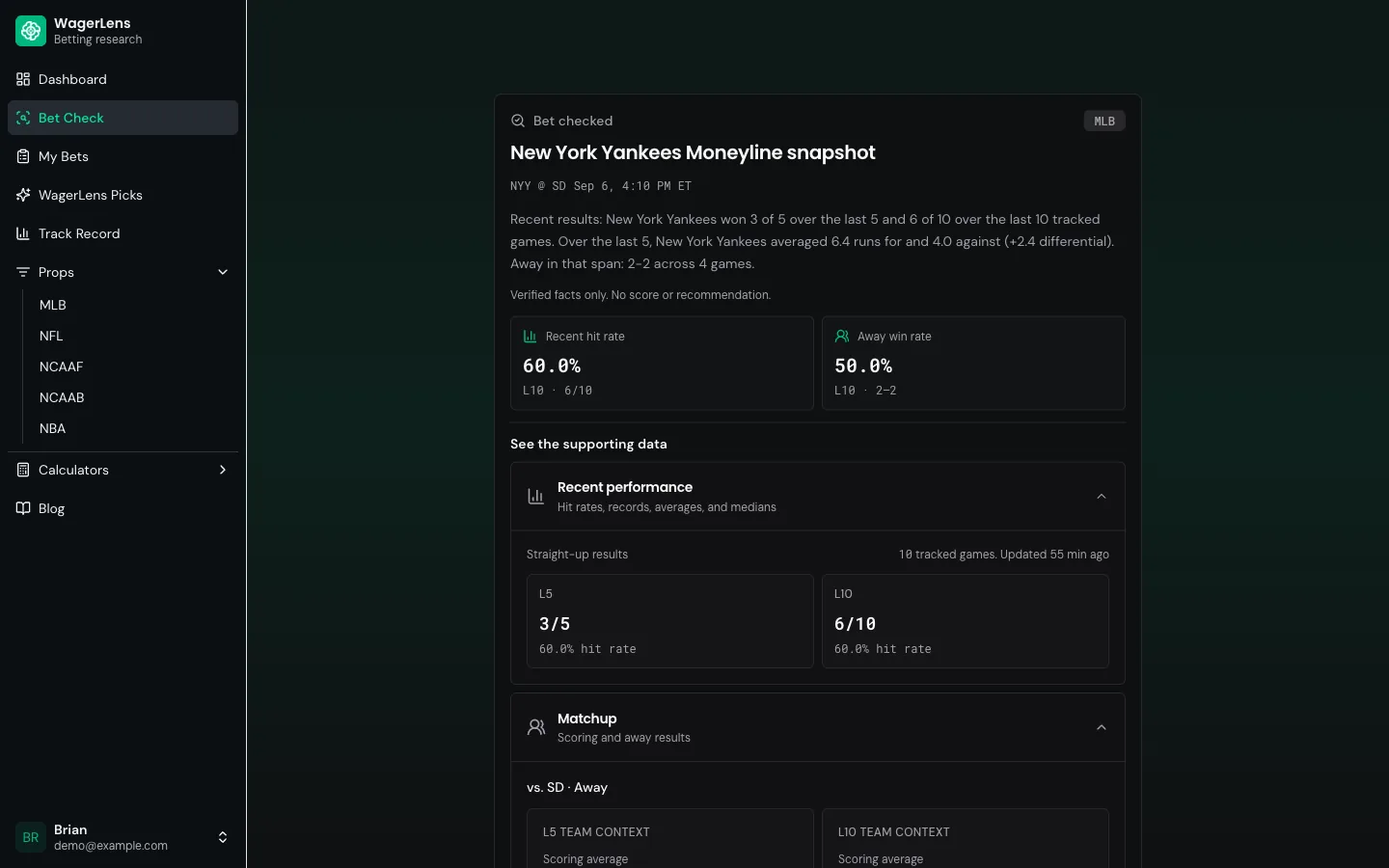
If WagerLens has prices, the card lists the books offering that market. The current sportsbook map carries eight books: BetMGM, BetRivers, Caesars, DraftKings, theScore Bet, FanDuel, Fanatics, and Pinnacle.
This is where a lot of slips leak money. -110 and -118 are not the same bet. The implied percentages beside those prices are break-even rates, not WagerLens win probabilities.
What we don't know
The card also names gaps. Thin samples, missing prices, stale quotes, unsupported markets, and failed matches are part of the output.
The UI does not currently use a separate thin-data badge. The thin-data state says "Not enough trusted data." Some matched markets can also say "We matched the bet" when WagerLens found the market but could not build a complete trend packet. That is not a lean against the bet. It is a warning about the evidence.
Ask a follow-up
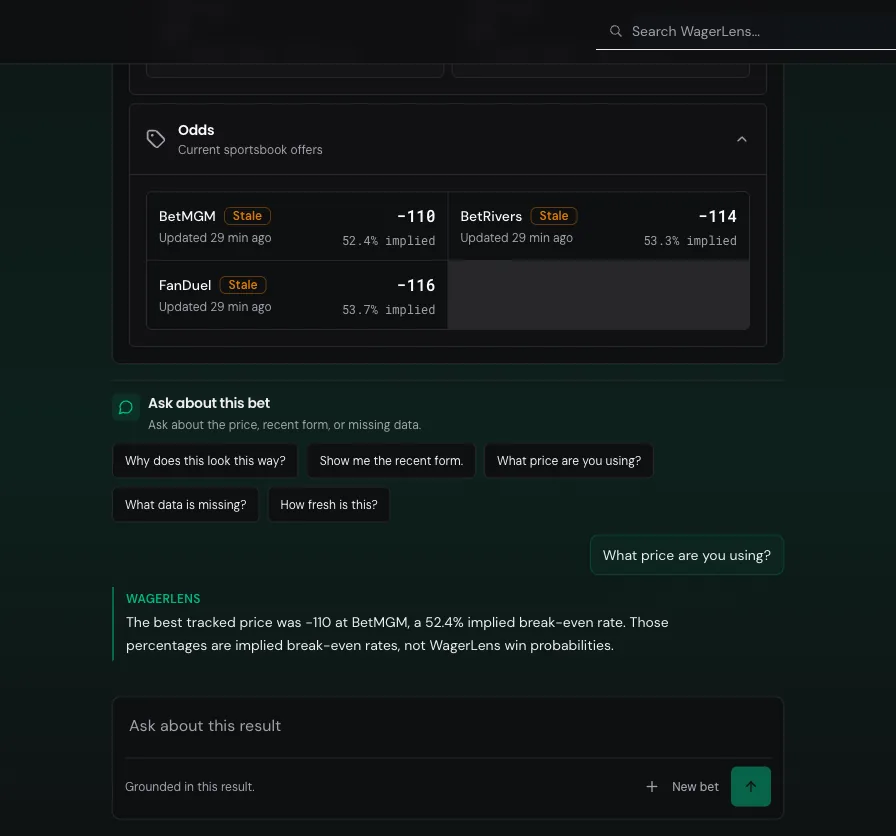
Follow-ups work after a complete single-leg result. You can ask one question about that card. Typed questions are capped at 240 characters.
Ask about price and it answers from the prices it found. Ask what is missing and it names the gaps. It is not open-ended chat, and that is the point.
Limitations
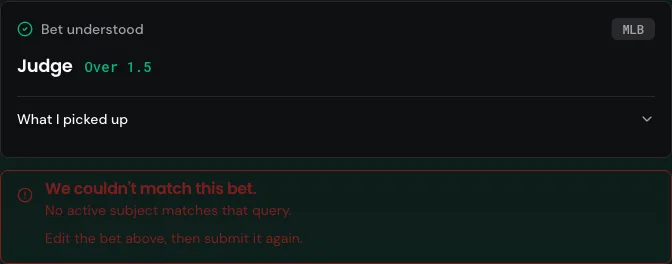
Bet Check is narrower than the bet slip in your sportsbook. That costs us some easy marketing copy, but it keeps the answer honest.
It can't read screenshots. It doesn't support NCAAF checks. It doesn't price parlays, calculate combined odds, or judge same-game correlation. Multi-leg slips are split and checked one leg at a time.
Each request has a 20-second deadline. A long slip, slow match, or upstream delay can time out. If that happens, shorten the slip or try again closer to game time.
Coverage is also market-specific. MLB, NFL, NBA, and NCAAB are supported for Bet Check, but exact markets depend on what WagerLens carries and what the books have posted. The sports and markets coverage guide is the reference when one example does not answer your market.
Getting started
Bet Check is free and doesn't need an account.
Go to Bet Check, type the bet you were already considering, and read the match before the metrics. If you want the full mechanics, keep the Bet Check user guide open the first time through.
See it live before you bet
Type a bet and see the evidence behind it.
- Every pick graded — wins and losses, no filters
- Hit rates for the exact line and recent windows
- Sportsbook price comparison on free Bet Checks
- Premium adds tracking, history and stats, and alerts
- Public track record with wins and losses