
How to research NFL player props in 5 checks
To research an NFL player prop, run five checks. Role: is the player getting snaps, routes, targets or carries? Matchup: what might change his opportunities? Sample size: how many games sit behind the hit rate? Line movement: what changed since the open? Price: what does the bet cost now? If a check fails, pass.
You see a receiver coming off a 100-yard game. The over looks tempting. But did a teammate's injury already move the line?
Start with the exact bet: player, market, side, line, price and book. "Over 64.5 receiving yards at -115" and "65+ yards at -130" describe the same outcome at different prices.
The five checks at a glance
- Role and usage: Is the player on the field, and how often does he get the ball?
- Matchup and game script: Could the opponent, spread or weather change his opportunities?
- Sample size: How many comparable games support the trend?
- Line movement: Did news or the market change the number you wanted?
- Price: What win rate does the available price require?
Have a prop in mind? Check a prop free. Bet Check matches the market, shows recent evidence and finds the best tracked sportsbook price.
Check 1: Role and usage
Opportunity comes before talent on a prop. A receiver can't clear a yardage line on routes he doesn't run.
For receivers and tight ends, check snaps, routes and targets. For running backs, check carries, goal-line work and routes for receiving props. For quarterbacks, check dropbacks and attempts, plus designed runs for rushing props.
An injury, returning starter or new quarterback can change the workload in a week. Read injury reports and confirm inactives before kickoff. One big game isn't proof of a new role.
Start with this week's NFL player props, then check team reports and route data.
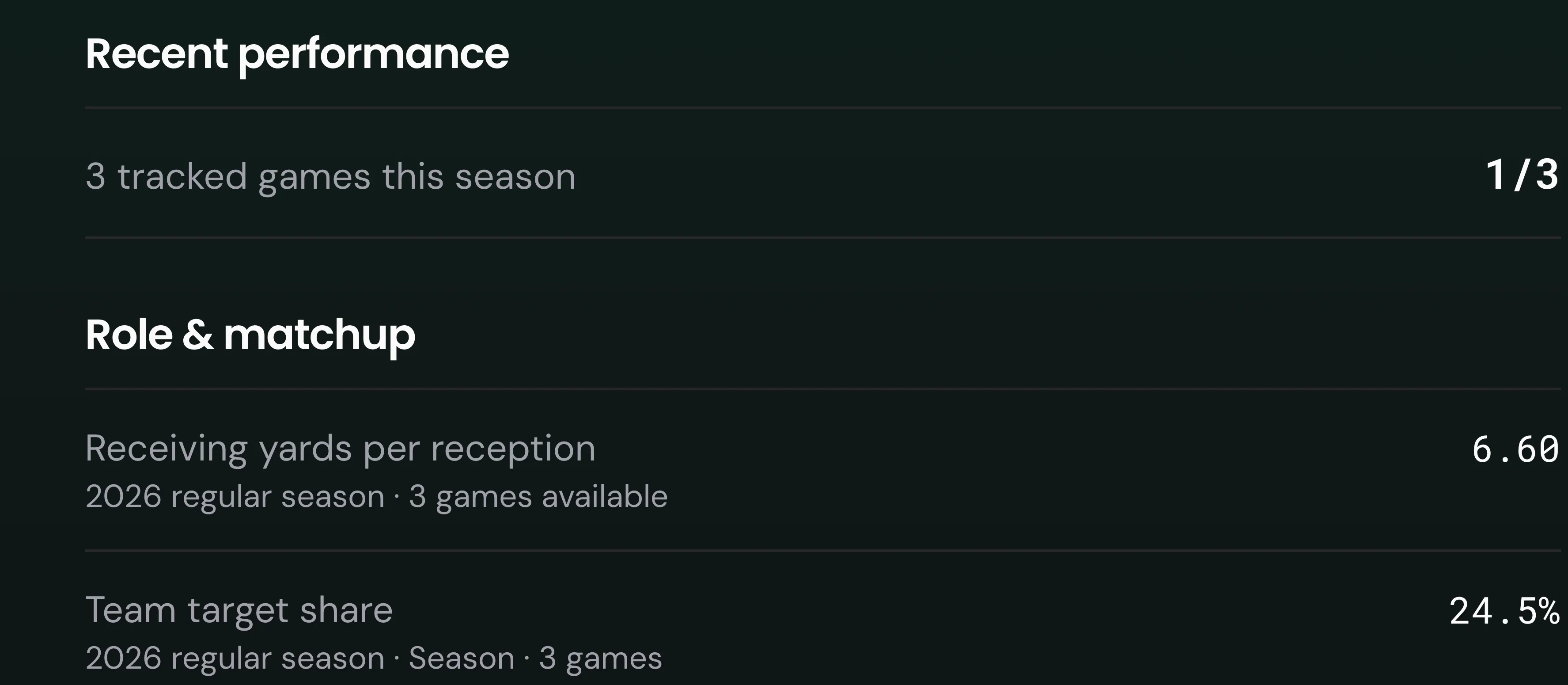
The KC Concepcion screenshots in this guide are real Bet Check snapshots from Sep 29, 2026, not the illustrative Receiver A example below. This check shows a 24.5% team target share across three games; it doesn't show routes. Tap a screenshot to read it full size.
Check 2: Matchup and game script
A matchup adjusts a role. It doesn't create one. If a tight end barely runs routes, a favorable defensive matchup still leaves him with limited chances.
The spread and total offer a rough read on game script. An underdog might throw more if it trails; a team protecting a lead might run late. Neither is guaranteed. A defense giving up short completions is different from one allowing deep plays.
Check the forecast. Wind can matter more to a deep-ball prop than season-long defensive averages.
Check 3: Sample size behind the hit rate
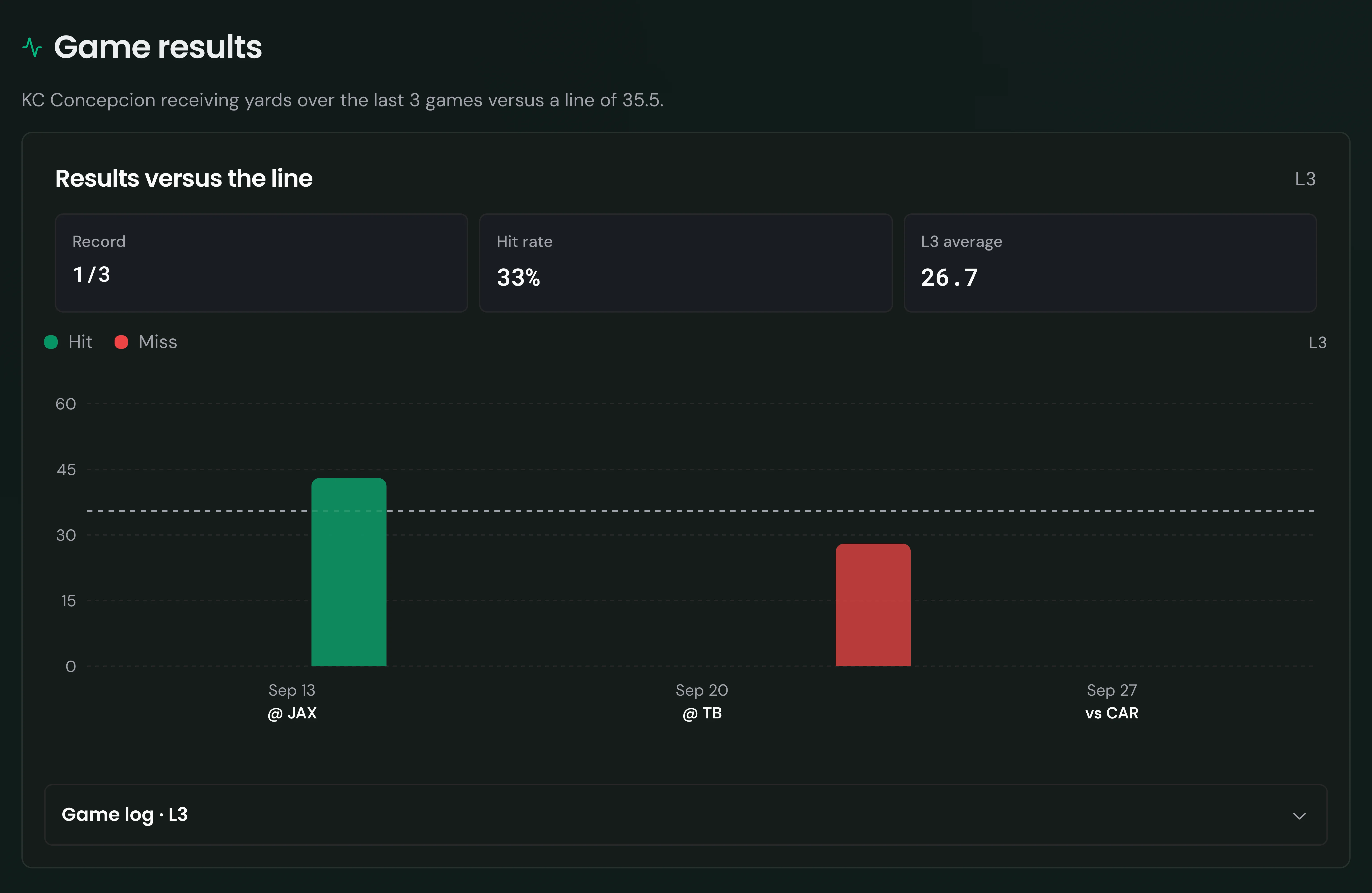
"Over in 2 of 3" and "over in 20 of 30" describe the same share, but not the same evidence. By Week 4, a player may have only three games this season. One long play can swing his current-year trend.
For 2 hits in 3 tries, a 95% Wilson interval runs from roughly 21% to 94%. That's not a forecast; it shows how little three results tell you. Last season helps only if the role, team and line are comparable.
Why the average can mislead you
One 60-yard touchdown can lift a player's average while most games remain below the line. Count how often he cleared this exact line, then look at his median, the middle result.
A line may sit closer to the median than to the average. Pricing matters too: "his average is above the line" isn't enough.
Check 4: Line movement
A move tells you the bet changed, not why or which side is right. News or betting action might explain it. Don't call every move "sharp money."
Compare the opener with today's line. If the over you liked at 61.5 is now 64.5 after a teammate was ruled out, reassess it at 64.5.
Confirm inactives and the quote near kickoff. Read more on why prop odds move.
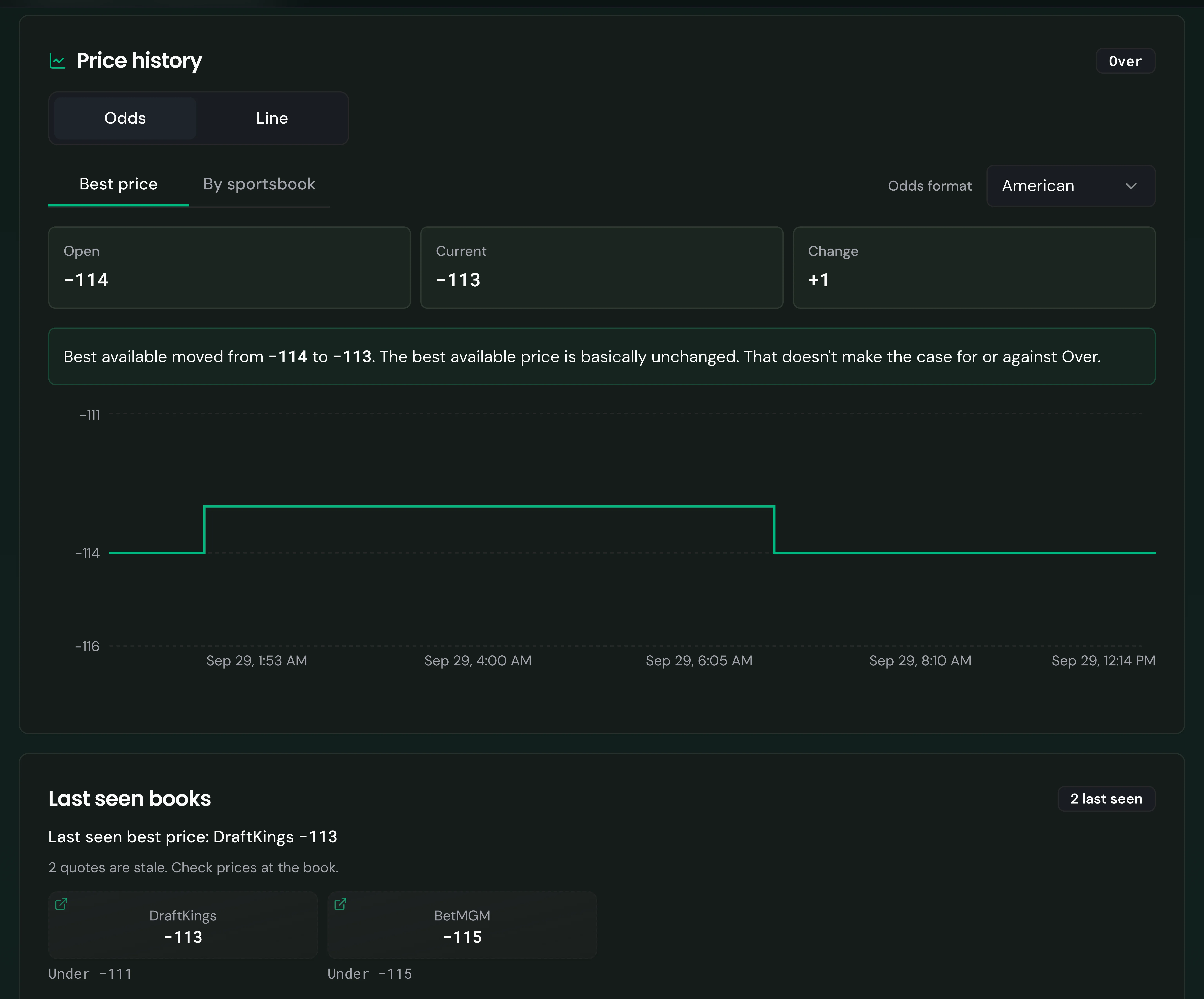
That's an odds move on a real prop, not the illustrative 61.5-to-64.5 line move above. The two last-seen quotes in the screenshot are stale, so neither is a current offer.
Check 5: Price across books
Books can offer different lines and prices. Compare like with like: over 64.5 isn't interchangeable with over 66.5.
| Price on the same line | Break-even win rate |
|---|---|
| -105 | 51.2% |
| -110 | 52.4% |
| -115 | 53.5% |
| -125 | 55.6% |
Going from -105 to -125 raises the break-even win rate by about 4.4 points. That's price math, not a player's win probability. Two sides at -115 add up to roughly 107% implied probability, or 7% overround. Try the vig calculator.
Free Bet Check shows the best tracked price. Premium compares all eight books. Confirm the quote at the book before betting.
A worked example
Put the checks to work
Type a prop into Bet Check as you'd say it. Confirm the matched player, market and line. Read the results with their sample sizes, then check the best price and quote time.
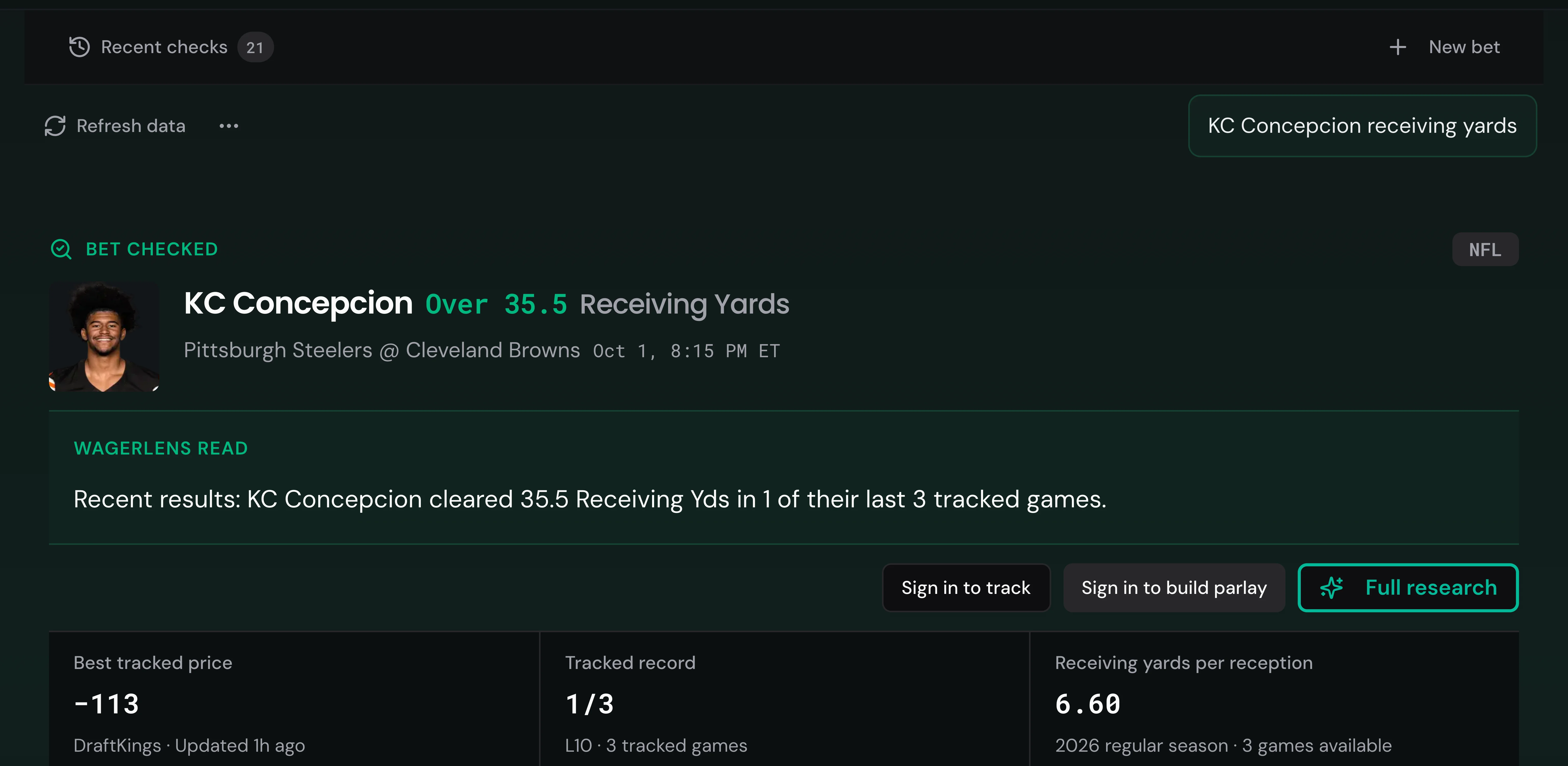
Bet Check is free without an account. It won't predict next Sunday's routes or place a bet. Check the injury report and game lines yourself.
If you want the full 8-book price view and bet tracking, you can Start your 5-day free trial. Premium is a paid account after the trial.
Watch for three-game streaks, averages mistaken for medians, injury angles already priced in, and the first price you see. Our public track record includes losses. Research won't remove them.
Keep researching
For the same research process in baseball, see how to research MLB player props. The Bet Check user guide explains how to read the matched market and supporting evidence.
WagerLens is a research tool, not a sportsbook. No prop is a sure thing. Bet only what you can afford to lose. If gambling stops being fun, call the National Problem Gambling Helpline at 1-800-522-4700.
Frequently asked questions
How do you research an NFL player prop?
Start with the exact player, market, line and price. Check role, game script, sample size, line movement and available price. Pass if the number is gone or the evidence is thin.
What matters most for NFL player props?
Opportunity: routes and targets for receivers, carries and routes for backs, dropbacks and attempts for quarterbacks. A player needs chances before matchup matters.
How many games do you need before trusting a hit rate?
There's no magic number. Early-season samples may cover only a few games. Read hits and total games, then compare the role and line across them.
Are prop lines set at a player's average?
Not necessarily. Big plays can lift yardage averages above a typical game. Check the median, games clearing the exact line, and price.
Why do NFL prop lines move?
Injuries, role changes, weather and betting action can move lines. A move doesn't reveal the cause or the right side. Find news and re-evaluate.
Does it matter which sportsbook I use?
Yes. Lines and prices vary by book. -105 needs roughly 51.2% to break even; -125 needs 55.6% on the same line. Verify the quote.
See it live before you bet
NFL props with confidence scores, hit rates, and trend data updated daily.
- Every pick graded — wins and losses, no filters
- Confidence scores so you know which to trust
- Best sportsbook price on free Bet Checks
- Full 8-book comparison with Premium